Resource Wars and the Accelerating Big Reset
How Recent Conflicts Reveal the True Battle for Commodities, and the End of Dollar Hegemony


When I wrote The Big Reset in 2013, I argued that the post-1971 dollar-based monetary system, built on the quicksand of endless debt, suppressed gold prices, and American financial dominance, was unsustainable. I predicted a coming reboot where gold would reclaim its role as a monetary anchor, the dollar would lose its exclusive reserve status, and powers like China and Russia would force a multipolar order. In the afterword, I warned that it could lead to war first. The events of early 2026 have not only validated that thesis but also accelerated it dramatically.
What we are witnessing in Ukraine, Gaza, Lebanon, Iran, and Venezuela is not a series of isolated regional crises. It is a coordinated great-power contest between the US/NATO/Israel axis and the China/Russia/BRICS/Iran bloc, fought primarily through control of the two most strategic commodity classes of our era: energy (oil) and critical metals/minerals.
At its core, this is a resource war. China dominates the refining and processing of rare earths, gallium, germanium, graphite, antimony, and other inputs vital for semiconductors, electric vehicles, wind turbines, missiles, and defense electronics, controlling over 70% of global rare-earth mining and 90% of processing. It has weaponized this leverage with export controls and licensing requirements, responding tit-for-tat to US tech bans and tariffs.
The US, meanwhile, uses its military reach, sanctions, conflicts, and alliances to deny adversaries cheap oil, the lifeblood of China’s import-dependent economy, where discounted crude from Iran, Venezuela, and Russia has long provided a critical cost advantage. As I posted on X just days ago: “The US is trying to harm China by attacking important oil suppliers Iran and Venezuela.”
Metals versus Oil is a New Great Game. Let us be clear: modern economies and militaries run on physical resources, not just fiat paper. As Alice Gower of Azure Strategy recently observed, “Great-power competition has returned to basics: who controls the physical resources that modern economies and militaries run on. Energy, critical minerals, and industrial capacity are leverage, not just economic assets.”
China’s strategy has been decades in the making. Recall Deng Xiaoping’s famous 1992 remark: “The Middle East has oil and China has rare earths.” Beijing has methodically built dominance in the “new oil” of the 21st century, critical minerals, while securing discounted energy supplies through shadow fleets and partnerships with sanctioned states. As a commodity fund manager, I have witnessed this firsthand.
So, the US countered by disrupting energy flows, choking China from cheap oil out of Venezuela or the Gulf, to face industrial slowdowns that crimp its military modernization.
This dynamic explains the interlocking conflicts we see today. Ukraine remains the grinding eastern front. Beyond the human tragedy, this war secures Russian control over grain, fertilizers, and Black Sea export routes while redirecting discounted oil and gas eastward to China and India. Western sanctions have failed to cripple Moscow; instead, they have forged deeper Russia-China energy ties. The US and NATO pour resources into Ukraine partly to weaken this axis and maintain leverage over global commodity pricing. By dragging the conflict as long as possible, they hope to weaken Russia. Putin already turned his country into a war economy; the West is no longer far behind.
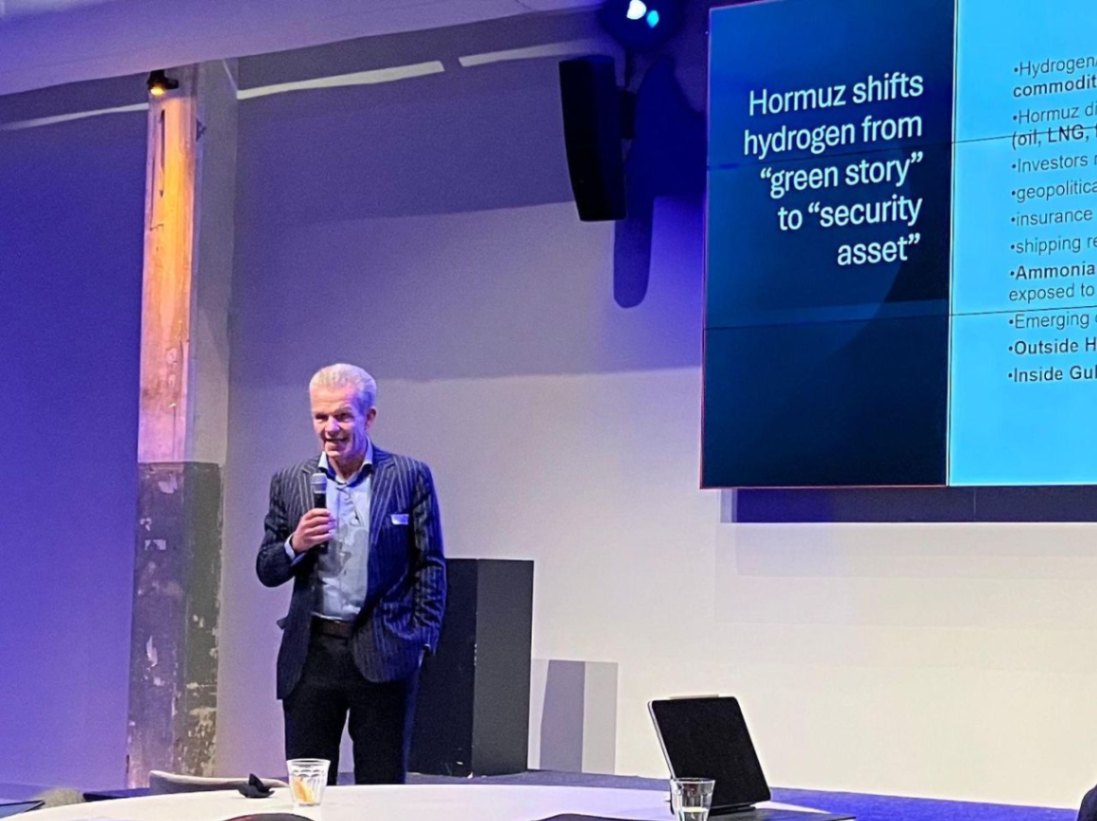
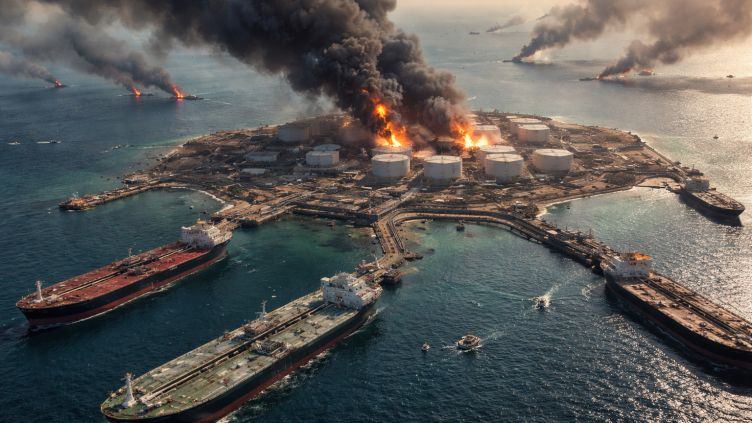
The Middle East theater, Gaza, Lebanon, and now direct strikes on Iran, represent the oil chokepoint battle. This escalated into US-backed strikes on Iran starting late February, targeting nuclear sites, missile facilities, and energy infrastructure. The closing of the Straits of Hormuz threatens to sink the world economy into a deep recession.
James Kynge of Chatham House captured the China angle perfectly: “The US attack this month on Iran, coupled with that on Venezuela in January, registers as a blow to China’s diplomatic and economic statecraft.” Beijing’s partnerships with Tehran and Caracas, spanning oil, infrastructure, and diplomacy, are under direct assault. Iran supplies China with heavily discounted crude; disruptions force Beijing toward costlier alternatives, eroding its competitive edge.
Velina Tchakarova, geopolitical strategist, calls this “the beginning of managed confrontation between the US & China… the core of the new Cold War,” where proxy wars multiply to avoid direct superpower clash. Venezuela completes the encirclement. US forces intervened early this year, removing Maduro and installing an interim government.
Washington is now reshaping the world’s largest proven oil reserves for “legal” export channels, directly cutting China’s access to cheap Venezuelan barrels. As one analysis noted, this aligns with US priorities to control critical mineral supply chains while eliminating rival footholds near its borders. China’s strategy of courting US adversaries is backfiring, exposing vulnerabilities in its energy security. Commodities are the glue binding these theaters. China’s export curbs on rare earths and related minerals squeeze Western supply chains for tech and defense.
Russia benefits as the pivot supplier. The result is hybrid warfare: proxies, sanctions, and resource denial. Global oil prices remain volatile; critical mineral shortages loom, with lead times of up to a decade for new Western supply.
For me, this is all part of the 90-Year Cycle: History does not repeat exactly, but it rhymes with remarkable consistency. Over the past five centuries, the world has experienced a fundamental shift in monetary and geopolitical leadership roughly every 80 to 100 years. In the 16th century, the Portuguese Empire dominated global trade and bullion flows after the great discoveries, establishing the first worldwide maritime commercial system. By the 17th century, the Dutch Republic took over. Amsterdam became the undisputed financial capital of the world, the Dutch East India Company pioneered modern corporate finance, and the guilder functioned as the leading international currency. The 18th and 19th centuries marked the British century. After the creation of the Bank of England and victory in the Napoleonic Wars, the British pound sterling became the world’s reserve currency, backed by the gold standard and protected by the most powerful navy on earth.
Then came the transition to American dominance. The two world wars exhausted the old European powers. In July 1944, delegates from 44 nations gathered in Bretton Woods, New Hampshire, to design the postwar order. The resulting system placed the US dollar at its center, convertible into gold, with the United States as the new global hegemon.
We are now, in April 2026, precisely 82 years into this Bretton Woods-derived dollar era. Statistically, we have entered the classic window in which such systems historically reach their limits. Rising debt, internal political division, military overextension, loss of manufacturing competitiveness, and the determined rise of China and the BRICS nations all indicate that the current cycle is maturing and approaching its end. However, these systemic changes bring chaos and even wars.
This long-view perspective helps us understand why the present commodity and resource conflicts are not random crises, but the visible symptoms of a much larger transition underway. This war on commodities is turbocharging the financial endgame. The dollar system, already strained by unsustainable debt (US external debt on a parabolic rise), is cracking under geopolitical pressure.
Central banks, led by China, Russia, and emerging markets, have been accumulating gold at a record pace as a neutral, non-dollar asset amid eroding trust in Western financial weapons. As I have long argued, the US waged a secret war on gold since the 1960s to preserve dollar dominance; that war is now being lost. COMEX gold open interest has hit historic lows, with price discovery shifting decisively to the Shanghai Gold Exchange, another sign of Eastern ascendancy. So, the US is now losing control over the prices for gold and silver, the anti-dollar metals. Silver, in particular, faces structural shortages from industrial demand clashing with decades of under investment in mining.
Compounding these international tensions is the looming domestic political risk in the United States. With midterm elections scheduled for November 2026, President Trump’s Republican Party faces the real possibility of losing control of the House, the Senate, or both. A substantial Republican defeat would quickly turn the second Trump term into a lame-duck presidency plagued by gridlock and domestic political warfare. Sustaining prolonged military engagements abroad, whether through sanctions on Russia and Iran, operations in the Middle East, or stabilization in Venezuela, would face fierce congressional resistance, funding battles, and possibly impeachment theatrics.
From a monetary and commodity perspective, such political paralysis would be highly significant. A weakened presidency facing a hostile Congress often leads to fiscal gridlock mixed with populist spending, further inflating America’s already unsustainable debt levels. This would accelerate the very processes I have long warned about: declining confidence in U.S. governance, faster dedollarization by central banks, and stronger demand for gold and other hard assets as the world hedges against American political dysfunction. BRICS nations are already accelerating de-dollarization: trade in local currencies, commodity-backed settlement experiments, and gold reserves as the new anchor.
Let me end with three plausible scenarios: From Stalemate to Catastrophe
We stand at the precipice of the largest geopolitical and monetary shift since World War II. The conflicts we see are symptoms of a deeper transition: from fiat dollar dominance to a commodity-anchored, multipolar reality, predicted by Zoltan Poszar some years ago.
Now, with the West fracturing into a US-Israel Mad-Men bloc and a more reasonable European bloc, The Big Reset is no longer a theory; it is well underway.
(Grok assisted writing, all prompting and editing by Willem Middelkoop)
We'll send you a nice letter once per week. No spam.